

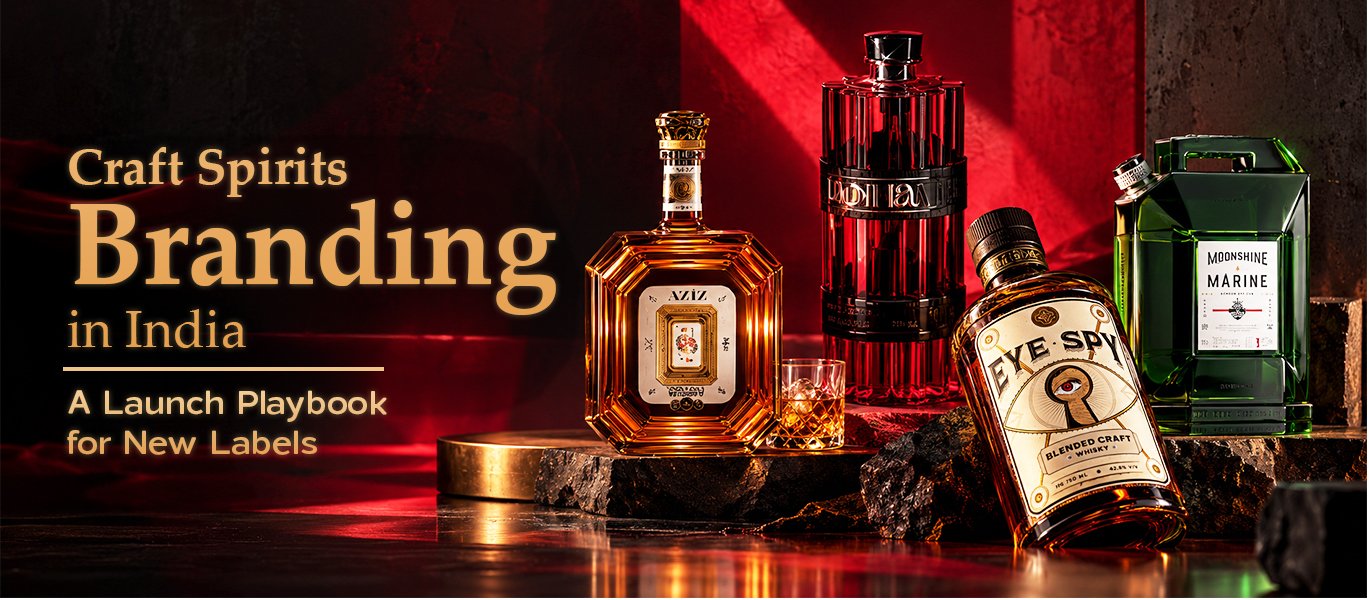
India's craft spirits scene has moved from a handful of pioneers to a crowded field of gins, single malts, rums and agave spirits. New labels launch every few months, and most compete for the same bar shelves and store counters. For a new brand, branding is not the finishing touch. It is the launch strategy. This playbook covers the steps that matter.
Step 1: Decide what you stand for, in one sentence
Before naming, before the bottle, write one sentence that says why your spirit exists and who it is for. Craft buyers are curious and story-driven. They will pay more for a brand that means something, but only if that meaning is clear.
Step 2: Name it for the shelf and the bar
A craft spirit name gets spoken across a noisy bar, typed into a search bar and printed on a small neck label. Test names for pronunciation, trademark availability and how they look in your chosen typeface. Short, distinctive names usually win.
Step 3: Pick the category code you will break
Every spirits category has visual codes. Whisky leans on heritage, gin on botanicals and tequila on Mexican folk art. Keep enough of the code for buyers to recognise the category, then break one rule on purpose.
Our concept tequila Dinamita, Spanish for "dynamite", does exactly this. It enters a masculine spirits arena with an identity designed to rewrite the rules rather than ask for a seat at the table. Good tequila bottle design can be playful and still feel premium.
Step 4: Design the bottle as the hero
With alcohol advertising restricted in India, the bottle is your main media. Think about:
- Glass. Stock or custom, clear or tinted, and what it says about the liquid.
- Closure. Cork, crown or screw cap, and how it feels to open.
- Label shape and finish. Embossing, foils and paper textures that reward a closer look.
- Signature detail. One element people remember, photograph and mention.
Moonshine Marine, an in-house concept, shows how a bottle can carry a deeper theme. It honours retired naval veterans through deliberate maritime and military design cues.
Step 5: Build compliance into the label from day one
FSSAI's statutory warning, alcohol content, Legal Metrology details and state-specific requirements all need space. Design the back label at true size first, then the front. Our guide to liquor label rules in India covers this in detail.
Step 6: Plan your state-by-state rollout
Most craft brands launch in two or three states first. Each state approves labels separately, so build a master label with fixed zones for state-specific details. It saves weeks with every new market.
Step 7: Create launch visuals before the first bottle ships
Distributors, bars and retail buyers want visuals before stock exists. Photoreal 3D renders let you build a pitch deck, social content and point-of-sale material while production is still underway.
Step 8: Extend the brand beyond the bottle
Bar menus, tasting kits, gift boxes, merchandise and social content should all feel like one brand. Plan the system early so every touchpoint feels considered.
Mistakes new craft brands make
- Copying the category leader. If your bottle looks like the market leader's, buyers will pick the leader.
- Too much story, too little clarity. The buyer still needs to know in seconds whether it is a gin, a rum or a whisky.
- Ignoring the bar. Bartenders recommend brands. A bottle that is hard to pour or hard to read on a back bar loses that support.
- Underestimating approvals. Label approval in each state takes time. Build it into the launch plan from the start.
- Spending everything on the bottle. Keep budget for launch visuals, bar materials and the first year of content.
What to look for in a craft spirits branding agency
- Launched spirits projects, not only concepts.
- Experience with label approvals and production.
- Bottle, label, identity and 3D under one roof.
Explore our work for Eye Spy whisky and other labels on our liquor and spirits page.
Frequently asked questions
How much should a craft spirits brand spend on branding?
More than most categories, because packaging does the job advertising does elsewhere. Budget for strategy, identity, bottle design and launch visuals together.
Can a stock bottle work for a premium craft spirit?
Yes, with a strong label, closure and finish. Many successful craft labels started on stock glass and moved to custom glass later.
Launching a craft spirit? Talk to our spirits team about naming, bottle design and launch visuals.

No Comments.